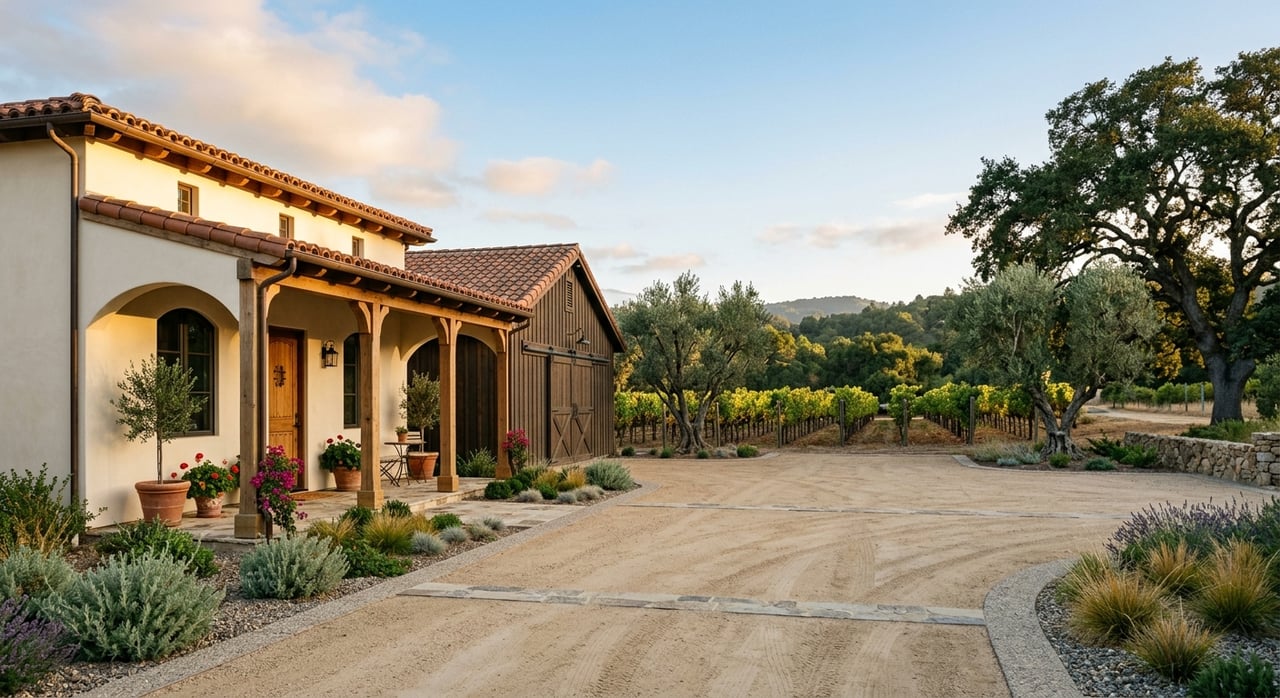
If you love the idea of space, privacy, and a more grounded kind of luxury, Escondido deserves a closer look. Many buyers who start along the coast eventually realize they want room to spread out, flexibility for guests or hobbies, and a property that feels like a retreat. In Escondido, you can find that ranch and estate lifestyle while staying connected to North San Diego County. Let’s take a closer look.
Why Escondido Appeals to Estate Buyers
Escondido sits about 30 miles northeast of downtown San Diego and about 20 minutes from the coast. That location gives you access to the broader North County lifestyle while offering a very different living experience from beachside communities. Instead of prioritizing immediate ocean access, many buyers here focus on land, privacy, and estate potential.
That tradeoff stands out in pricing. For the three months ending May 2026, Redfin reported Escondido’s median sale price at $804,519, compared with much higher median sale prices in nearby coastal markets like Carlsbad, Encinitas, Solana Beach, and Del Mar. For buyers seeking a larger homesite or long-term estate upside, Escondido can represent relative value within the San Diego region.
Lifestyle also plays a role. Visit Escondido describes a city shaped by wineries, craft breweries, arts, and a historic downtown. That mix helps explain why Escondido attracts buyers who want more land without feeling disconnected from dining, culture, and recreation.
What Ranch and Estate Living Means
In Escondido, the ranch and estate feel is tied to the city’s land-use patterns. Planning documents describe rural and estate neighborhoods as large-lot settings with low building coverage, extensive on-site landscaping, agricultural properties, and informal rustic streets. In simple terms, that often means a more open, spacious environment than you would find in denser coastal neighborhoods.
The city also distinguishes between agricultural residential and estate residential areas. R-A zoning is intended to protect agricultural uses from urban encroachment, while R-E zoning is designed to provide a rural setting for family life with limited agricultural pursuits. Those distinctions matter because they shape what you may be able to do with a property over time.
Density is another clue to the lifestyle. The city summarizes R-A areas at roughly 1 unit per 5 to 10 acres, while R-E areas are based on lot sizes ranging from 20,000 to 210,000 square feet. That does not mean every property will feel the same, but it helps explain why Escondido can offer the physical scale many luxury buyers want.
How the Lifestyle Differs From the Coast
If you are moving inland from Del Mar, Solana Beach, Encinitas, or Carlsbad, the change is usually not about giving something up. It is about choosing a different priority. In Escondido, the appeal often centers on privacy, elbow room, agricultural potential, and the ability to enjoy more of your lifestyle on your own property.
That can mean space for a pool, gardens, guest quarters, outdoor entertaining areas, or animal facilities if zoning allows. It can also mean a quieter rhythm and a stronger connection to the land. For many buyers, that is the real luxury.
Escondido also has a strong recreation and culture layer that supports this lifestyle. The city operates more than 4,500 acres of open space, including Daley Ranch, Dixon Lake, and Lake Wohlford. Local attractions also include the San Diego Zoo Safari Park, the California Center for the Arts, Queen Califia’s Magical Circle, historic downtown, and a well-established wine scene.
Wine Country and Agricultural Appeal
Wine culture is part of Escondido’s identity. Visit San Diego notes that Escondido’s wine region offers more than 20 experiences, ranging from urban wineries to hilltop terraces and vineyard views. For buyers who want an estate with a vineyard-adjacent feel, that local backdrop adds to the appeal.
San Diego County also recognizes three designated wine-grape growing AVAs: San Pasqual Valley, Ramona Valley, and San Luis Rey. San Pasqual Valley, which is closely associated with the Escondido area, has been recognized since 1981. That does not automatically make every parcel suitable for vines or winery use, but it does show that wine growing is part of the broader regional landscape.
If you are considering a vineyard, boutique agricultural use, or winery-related potential, jurisdiction matters. Rules may differ depending on whether a parcel is inside Escondido city limits or in unincorporated San Diego County. Before you make assumptions about use, it is wise to confirm the exact zoning and governing authority for the property.
ADUs and Flexibility on Estate Parcels
One reason estate properties appeal to buyers is flexibility. In Escondido, single-family properties may allow one accessory dwelling unit, or ADU, plus one junior accessory dwelling unit, or JADU. The city says ADUs may be attached, detached, or created through conversion of existing space, and they can be up to 1,000 square feet.
For many buyers, that creates options for guest accommodations, live-in support, or longer-term rental use. The city also states that parking is not required for ADUs. Still, the practical fit will depend on your lot layout, existing improvements, and project goals.
Rental rules matter too. Escondido states that short-term rentals are not permitted in the city, and ADU rental periods must be 30 days or longer. If you are evaluating income potential, long-term occupancy is the more realistic framework.
Animals, Barns, and Rural Features
Some buyers are drawn to Escondido specifically because they want a property that can support a more rural lifestyle. City code allows accessory buildings for animals and enclosures in R-A and R-E zones, and the city’s animal tables show that horses and some farm-type animals may be allowed in certain residential zones, subject to lot-size and zoning limits.
That said, this is an area where details matter. A beautiful estate with acreage does not automatically allow every intended use. If you are thinking about a hobby barn, horse setup, or animal facilities, you should verify the parcel’s exact zoning and development standards before moving forward.
Climate and Land Stewardship Matter
Escondido’s climate supports outdoor living, but it also requires planning. The city’s wildfire-planning document describes Escondido as having a hot-summer Mediterranean climate with about 15 inches of annual precipitation each year, with most rainfall occurring between December and March. That pattern can be attractive for patios, gardens, and year-round use of outdoor spaces.
It also means irrigation and landscape strategy matter on larger properties. Estates with extensive grounds can be beautiful and functional, but they typically require more attention than a compact coastal lot. Buyers should think through water use, plant selection, and long-term maintenance from the start.
Wildfire Due Diligence for Estate Buyers
Wildfire planning is a key part of buying in many inland areas, including parts of Escondido. The city states that CAL FIRE’s updated hazard map classifies parts of Escondido as moderate, high, or very high hazard severity zones. In high and very high zones, defensible-space requirements and transaction disclosure obligations can apply.
This does not mean you should avoid estate living in Escondido. It means you should evaluate fire exposure with the same care you would give lot orientation, access, condition, and future use. On a luxury purchase, informed due diligence helps protect both lifestyle and long-term value.
What to Evaluate Before You Buy
Luxury ranch and estate properties are highly individual. Two homes with similar square footage can offer very different utility depending on zoning, access, topography, and existing improvements. A thoughtful review upfront can help you avoid surprises later.
Here are some of the most important items to review:
- Exact zoning designation and permitted uses
- Whether the property is within Escondido city limits or unincorporated county area
- Lot size, topography, and usable land
- ADU or guest-house potential under current rules
- Animal or agricultural allowances tied to parcel size and zone
- Irrigation, landscaping, and ongoing maintenance needs
- Wildfire hazard classification and defensible-space obligations
- Long-term goals, including personal use, multigenerational living, or longer-term rental income
Why Escondido Stands Out
Escondido offers a version of luxury that feels more expansive and land-driven than coastal North County. You may trade immediate beach walkability for privacy, acreage, and flexibility, but for many buyers that is exactly the point. The lifestyle is less about being steps from the sand and more about creating a property experience that supports how you actually want to live.
For discerning buyers, that can be a smart shift. Escondido combines rural and estate character, local wine culture, recreation, and relative value within the San Diego market. When matched with the right parcel and careful due diligence, it can be an exceptional fit for buyers seeking a refined inland estate lifestyle.
If you are considering a move into North County acreage, equestrian property, or estate living, working with a seasoned advisor can make the search more focused and far more strategic. To explore your options with tailored guidance, connect with Debe McInnis.
FAQs
What makes Escondido appealing for luxury ranch and estate living?
- Escondido offers larger lots, more privacy, agricultural and estate character, and relative value compared with many nearby coastal North County markets.
What zoning should you review for Escondido estate property?
- You should review the property’s exact zoning, especially whether it is in an agricultural residential or estate residential area, because allowed uses can vary by zone and lot size.
Can you build an ADU on an Escondido estate property?
- The city says single-family properties may allow one ADU and one JADU, with ADUs permitted as attached, detached, or converted space, subject to current rules and site conditions.
Are short-term rentals allowed for Escondido estate homes?
- No. Escondido states that short-term rentals are not permitted in the city, and ADU rentals must be for periods of 30 days or longer.
Can you keep horses or farm animals on an Escondido property?
- In some cases, yes. The city’s rules indicate that horses and some farm-type animals may be allowed in certain residential zones, depending on lot size and the parcel’s exact zoning.
What wildfire issues should you check when buying in Escondido?
- You should check whether the property is in a moderate, high, or very high fire hazard severity zone, because defensible-space standards and disclosure requirements may apply.
Is Escondido considered part of San Diego wine country?
- Escondido is closely tied to the local wine scene, and the broader area includes recognized wine-grape growing regions such as San Pasqual Valley, which supports the area’s vineyard and winery identity.